Global Education Trends, Study Abroad and AI Learning in 2026
Explore the latest global education trends shaping learning, technology, online classes, student skills, and the future of education worldwide.
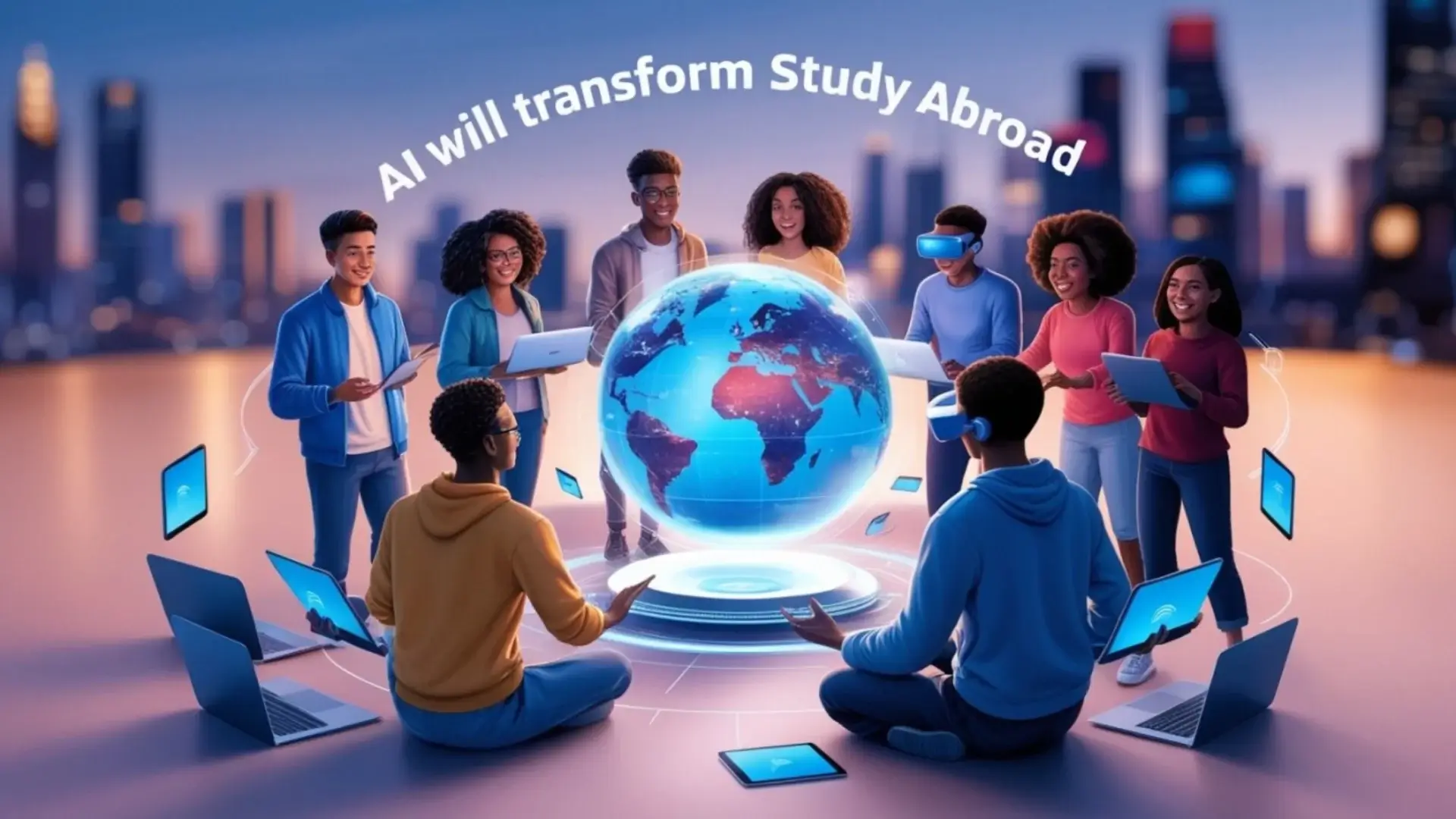
Education is advancing more rapidly now than ever before in modern history. Artificial intelligence, mobility, and outcomes based on skills all shape the educational environment for today’s learners. The top global education trends in 2026 demonstrate that educational institutions have begun to look anew at the way students learn, where they do their learning, and which qualifications hold sway. Governments, universities, and corporations are adapting education to meet economic needs, technological innovation, and lifelong learning.
According to the UNESCO reports there are over 1.4 billion students enrolled in educational institutions in 2024 furthermore, post-secondary education enrollment has increased dramatically since 2000. However, there are still 273 million children and youths worldwide who remain without educational access and need immediate solutions to this situation.
Global Education Snapshot
Indicator | Latest Estimate | Why It Matters |
Students enrolled globally | 1.4+ billion | Shows scale of education demand |
Out-of-school children and youth | 273 million | Highlights access inequality |
Higher education growth since 2000 | Significant rise | More learners pursuing degrees |
Main learning model in 2026 | Hybrid learning | Combines campus and digital education |
The Rise of Flexible and Digital Learning

The global educational system currently utilizes online distance learning programs as its primary method for delivering educational content. The current trend in educational institutions requires them to adopt a hybrid model which combines traditional classroom instruction with virtual learning methods.
The online learning growth worldwide has increased because of this trend which specifically benefits working adults. The working adults need educational programs which allow them to study according to their personal schedules and their other responsibilities. The popularity of microlearning programs and modular certificates and self-paced learning has increased because they provide faster results at lower costs.
Today, most leading organizations consider digital delivery to be a primary strategy rather than a secondary one. This shift will enable education to be provided to rural populations, foreign students, and non-conventional learners.
Popular Digital Learning Models in 2026
Learning Format | Description | Best For |
Hybrid Learning | Mix of classroom and online teaching | University students |
Self-Paced Courses | Learners study on their own schedule | Working professionals |
Micro Credentials | Short skill-based certifications | Career upskilling |
Live Virtual Classes | Real-time online sessions | Remote learners |
Artificial Intelligence Is Reshaping Classrooms
One of the latest trends that are being discussed in the sphere of global education relates to the fast-growing use of AI applications. The role of generative AI technology in assisting students with summarizing information, generating ideas, problem-solving, and getting tailored tutoring has become prominent. Meanwhile, teachers can use AI for lesson planning, evaluation, and monitoring.
OECD reports highlight increased use of AI among students at both the secondary and higher education levels for such purposes as gaining explanations, supporting research, and being productive.
According to the recent AI in education trends imply that the future lies not in substituting teachers, but rather in improving their capabilities. Indeed, efficient systems will be able to integrate AI efficiency with mentorship, emotions, and critical thinking.
On the other hand, institutions are also developing policies on ethics, plagiarism, privacy, and the responsible usage of AI. This balance will define the next step for digital education.
AI Use in Education
AI Tool Use | Benefit |
Personalized tutoring | Customized learning support |
Automated grading | Saves teacher time |
Lesson planning | Faster content preparation |
Language support | Helps international students |
Data insights | Tracks student progress |
Student Mobility Is Evolving
Studying abroad still represents an enticing dream, however, the places students choose to go to have altered. The current global education trends reveal that students are venturing to more countries rather than limiting themselves to traditional favorites like America or Britain.
According to student mobility statistics, it shows changing trends in terms of preference toward Canada, Germany, Australia, Ireland, UAE, and newly developing centers in Asia. The essential factors which require evaluation include cost and visa routes and employment opportunities and security measures.
The evolving international education trends require universities to compete in terms of quality, experience, and careers rather than just their reputation.
Other future study abroad trends 2026 include shorter mobility programs, dual-degree courses, semester exchange programs, and hybrid international programs in which students start their course online but then complete it offline.
Top Study Abroad Destinations in 2026
Country | Main Attraction |
Canada | Post-study work pathways |
Germany | Affordable tuition |
Australia | Strong global rankings |
Ireland | Tech job opportunities |
UAE | Regional business hub |
Skills Based Education Is Becoming the Priority
The degree remains relevant, but companies seek skilled people. It is among the key trends in international education that influence universities globally.
Students are demanding for programs that are related to employability, entrepreneurship, and practical projects. Because of this, educational organizations are revamping their curriculums in terms of digital literacy, communication, leadership, programming, sustainability, and analytics.
Currently, the higher education trends worldwide include the following:
Trend | Impact |
Industry collaborations | Better job readiness |
Internship-integrated degrees | Real work experience |
Work-based learning | Practical knowledge |
Stackable credentials | Flexible qualifications |
Embedded career services | Faster placements |
This trend reduces the difference between academics and workplace readiness.
Lifelong Learning is The New Normal
Educational systems are not restricted to people aged 18 to 25 anymore. The most evident trend in international education is that of reskilling. Due to technological advances and changes in the economy, employees need to go back to studying again.
Executive courses, professional certifications, language programs, and technical bootcamps are growing rapidly. The universities are catering to lifelong learners at all stages of their lives, not just the initial entry-level students.
The broader demand also represents an underlying global learning trends where the constant updating of knowledge becomes essential to the profession. One diploma is not sufficient for a person’s career spanning four decades.
Equity and Inclusion Remain Central
Although innovation is making headlines, access is the real problem worldwide. According to UNESCO statistics, there have been some improvements made in enrollment, yet there are still numerous areas affected by poverty, war, gender issues, disabilities, and poor infrastructure.
This explains why the current global education trends are emphasizing inclusive policy. Many governments have invested heavily in school feeding programs, transportation, scholarships, rural connections, and financial support to marginalized groups.
Technology is enhancing the learning experience of disabled students using tools such as captioning, screen readers, adaptive programs, and multi-language technologies.
Data Driven Institutions Are Rising
University administrators today are increasingly turning to analytics for solutions. Most universities are now using dashboard technology to monitor their students' engagement levels, factors that may place them at a high risk of dropout and more, and take corrective action at the earliest possible intervention in time.
This highlights the broader digital transformation in education sector, which operates under an evidence-based decision-making approach. This is because data enables organizations to make personalized interventions, resource allocation, and quick responses.
The future universities would operate more as intelligent ecosystems than as conventional campus-based learning organizations.
Sustainability and Global Citizenship Matter More
The students now look for education that can tackle issues related to climate change, ethics, diversity, and international cooperation. The universities are incorporating the concepts of sustainability in business, engineering, science, and humanities programs.
These are the trends that define the future of education globally, with learners who are technically skilled yet socially responsible, culturally aware, and adaptable.
Those educational institutions that equip their learners for both career and civic success will be ahead in the coming decade.
What Students Should Do in 2026
For success in this era of global education trends, students should strive for flexibility. Select courses which provide both practical and theoretical educational value. Learn the responsible methods of working with AI technology. You can achieve international experience through participation in exchange programs or internship opportunities. Gain or build your ability to communicate and analyze information that is beyond the capabilities of machines.
Above all else, consider learning as a continuous process and not an end-state achieved upon graduation.
And Here’s the Conclusion
As the global education system changes, it reveals a more intelligent, adaptable, and skills-based future. Those institutions that adopt technologies, mobility, inclusiveness, and lifelong learning will determine the future success of their students across the world.
Stay Ahead With EraEase
Find reliable information about education, career advice, and global trends at EraEase. Enjoy valuable information that will assist you daily in achieving success and growth in your life.
FAQ’s
What are global education trends?
Trends in global education are the significant developments that influence how students learn globally, such as the integration of technology, online learning, use of artificial intelligence, and skill-based educational models.
Why is studying abroad popular in 2026?
The popularity of studying abroad continues since students seek better career prospects and international exposure together with high-quality education and employment opportunities that they will have after finishing their studies.
How is AI changing education?
AI development has led to better personalized learning systems, automatic administrative task solutions, teacher assistance methods, and student performance enhancement strategies.
Why is lifelong learning important today?
Life-long learning creates the ability to compete in the job market, contributing to the an increased professional skill set.
What skills are most valuable for future students?
Ahead are some of the key future-ready skills which include digital literacy, communication, critical thinking, adaptability, leadership and problem-solving.

About

EraEase brings practical guides on travel, automotive, e-commerce, and education, helping you simplify choices and make smarter decisions.




Newsletter
Subscribe now to stay updated with top news!
Subscribe to our newsletter and be the first to access exclusive content and expert insights.
By clicking the Subscribe button, you acknowledge that you have read and agree to our Privacy Policy and Terms & Conditions