How AI in Education Improves Learning with Smart Tools in 2026
Discover how AI in Education is transforming learning with smart tools, personalized teaching, virtual classrooms, and improved student engagement in 2026.
Technological changes are revolutionizing the process of learning for students and teaching for instructors. Currently, use of AI in education has enabled educational institutions to provide more advanced and effective ways of learning. This ranges from personalized learning to fast feedback.
Teachers usually encounter problems like larger class sizes and varied learning capabilities among other factors that affect their work. In this context, the application of AI in education is extremely beneficial to teachers as well as their students.
Understanding AI in Modern Education

The term artificial intelligence in education system refers to the employment of sophisticated computer technology that is capable of doing functions similar to those performed by human intelligence. It entails analysis of data, language comprehension, behavioral pattern recognition, among others.
For example, use of technology like ChatGPT, Google Gemini, and Microsoft Copilot can help students comprehend ideas, summarize information from class sessions, and generate ideas for their assignments. Instructors may also use these tools to organize and implement classroom activities.
With the increased adoption of AI in learning environments, there will be an increase in data-driven learning experiences.
Major Benefits of AI in Learning
There are numerous benefits of AI in education which improve teaching and educational results.
Benefit | How It Helps |
Time Saving | Automates grading, attendance, scheduling |
Fast Feedback | Gives instant results and corrections |
Better Accessibility | Supports speech-to-text and translation |
Personalization | Creates custom learning plans |
Higher Engagement | Interactive quizzes and AI tutors |
Also, better accessibility is an added advantage. In cases where students suffer from issues relating to learning and communication, software like Grammarly, Microsoft Immersive Reader, and speech-to-text can be employed. Considering all the aforementioned perks, AI in education becomes crucial in every country.
Personalized Learning for Every Student
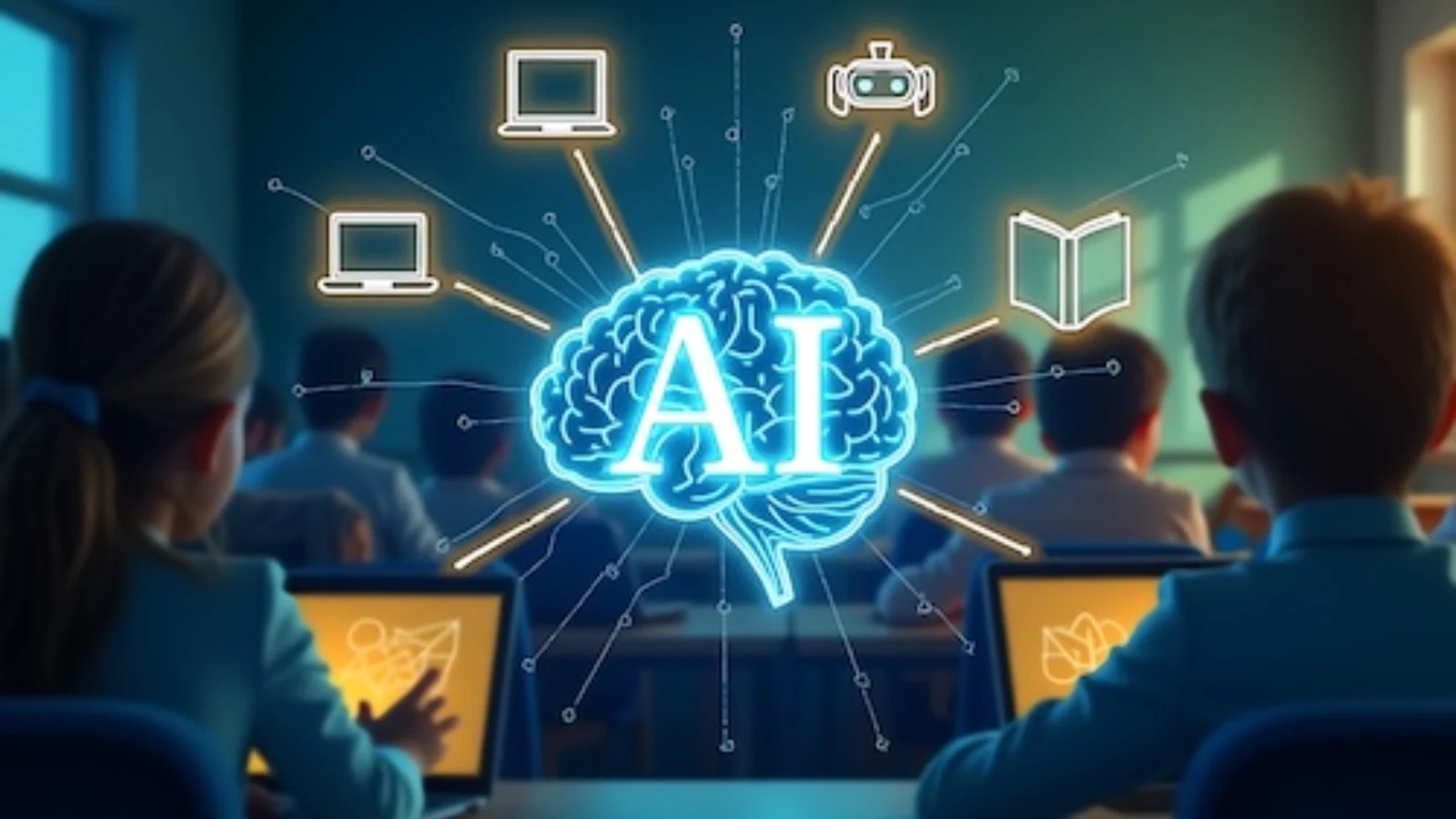
Each individual has their own unique way of learning. Whereas some learn better from video lectures, others may be better at learning from textbooks or practical work. Personalized learning with AI will help personalize learning plans based on individual student's needs.
Such learning platforms include Khan Academy's Khanmigo, Duolingo Max, and Coursera's AI learning programs that monitor student performance.
Student Need | AI Solution |
Weak in Math | Extra practice questions |
Fast Learner | Advanced lessons |
Language Barrier | Instant translation tools |
Revision Need | Smart summaries |
With such techniques, underperforming students can receive additional help, whereas better-performing students can advance with confidence. That explains how AI is creating more student-oriented classrooms.
AI in Online Learning Platforms
The adoption of digital education has become common over the past few years. The application use of AI in online learning enables one to improve the field of distance learning using chatbots, tracking the progress of students, course suggestions, and automation.
Companies like Udemy, Coursera, Byju's, and Unacademy utilize the technology of AI for the purpose of suggesting courses and tracking the progress of students. The virtual tutor gives answers to any questions round the clock.
Teachers get information regarding student engagement, participation, and academic performance. Using these functions, artificial intelligence is making online classes efficient and adaptive within education.
AI Feature | Benefit in Online Learning |
Chatbots | 24/7 student support |
Analytics | Tracks progress |
Recommendations | Suggests next courses |
Auto Assessment | Instant quiz results |
Best AI Tools for Students and Teachers
There are various AI tools for students and teachers that are available to utilize today. For instance, students can employ:
ChatGPT for explanation and brainstorming
Grammarly for writing assistance
QuillBot for paraphrasing and summarizing
Notion AI for note-taking
Photomath for mathematical problem-solving
Duolingo Max for language education
A teacher could use:
Canva Magic Write for presentation purposes
Quizizz AI for making quizzes
Turnitin AI tools for checking plagiarism
Microsoft Copilot for productivity
Google Gemini for research and planning lessons
AI technologies minimize workloads and enhance productivity. Used judiciously, AI in education will augment the efforts of teachers without replacing them.
Machine Learning and Better Decisions
Machine learning in education is one of the aspects in artificial intelligence that plays a very vital role in education by enabling the system to learn from the data available and make improvements. Its capabilities include identifying students' weak spots, predicting dropouts, and offering possible interventions.
Use Case | Result |
Detect weak subjects | Early support |
Predict dropout risk | Better retention |
Analyze attendance | Improve discipline |
Learning trends | Better curriculum planning |
Moreover, machine learning algorithms are employed for making effective curriculum decisions and ensuring students' success strategies.
Smart Classrooms Technology
Smart classroom technology is increasingly being applied by modern institutions for the purpose of designing classrooms that foster active learning. Such classrooms can comprise attendance tracking systems, smart boards, voice assistants, and interactive displays.
These include Google Classroom, SMART board, Zoom AI Companion, facial recognition attendance system, and other similar tools.
Smart Classroom Tool | Purpose |
Smart Boards | Interactive lessons |
AI Attendance | Automatic presence tracking |
Voice Assistants | Quick commands |
Live Polling Tools | Better engagement |
The students will have a more interactive educational experience, and teachers will be able to keep track of the students' level of engagement. As the intelligent infrastructure increases, artificial intelligence technologies continue to improve classroom learning experiences.
AI-Powered Learning Platforms
Several entities employ AI-powered learning platforms which combine instruction, evaluation, and analysis into one whole. The software suggests a review plan, creates test questions, and monitors user progress through automatic tracking.
Platform | Main Strength |
Khan Academy | Personalized tutoring |
Coursera | Skill development |
Moodle AI Plugins | Smart LMS tools |
Blackboard Learn | Student analytics |
Edmodo | Classroom collaboration |
These platforms prove particularly helpful for exam preparations, skill acquisition, and professional training. The use of AI in the field of education will become more effective as technologies progress.
Challenges and Responsible Use
AI brings many possibilities, but it should be used responsibly. School administrators must keep the student information confidential, refrain from becoming overly reliant on AI technologies, and maintain fairness.
Educators need to teach their students how to employ technologies in an ethical manner. The relationship between creativity and learning needs to be supported through AI technology.
The implementation of AI in educational settings will help students achieve academic success when it is used correctly.
The Road Ahead
The future of education with AI appears promising. Virtual tutors, language instruction, career guidance through AI, tests, and classroom environments are some of the applications that may arise.
Additionally, students in far-off places could be provided with equal educational opportunities compared to those students living in the most developed cities. With continuous advancements in technology, AI would make the world education system a better one.
Conclusion
Educational AI has revolutionized learning using intelligent technologies and effective support systems. In case of proper usage, artificial intelligence will be important in empowering educators, helping students, and forming an intelligent world in education.
FAQ’s
What is AI in education?
In education, artificial intelligence refers to the utilization of artificial intelligence technologies and software for enhancing teaching, learning, evaluation, assistance, and management.
How does AI in education help students?
The learning needs of students require personalized learning solutions which need to provide immediate feedback together with intelligent tutoring systems, foreign language assistance, and complete access to educational materials.
Can AI in education replace teachers?
AI cannot replace teachers. While the tool helps teachers in performing monotonous work, creativity and guidance from teachers are still critical for students.
What are the best AI tools used in education?
Learning through AI technology is gradually gaining ground through tools such as ChatGPT, Grammarly, Google Gemini, Quizizz AI, Photomath, and Khan Academy’s Khanmigo.
What does the future hold for AI in education?
The future of education might involve smart classrooms, virtual tutors, personalized learning methods, multilingual instruction, and futuristic and better educational opportunities for everyone.

About

EraEase brings practical guides on travel, automotive, e-commerce, and education, helping you simplify choices and make smarter decisions.




Newsletter
Subscribe now to stay updated with top news!
Subscribe to our newsletter and be the first to access exclusive content and expert insights.
By clicking the Subscribe button, you acknowledge that you have read and agree to our Privacy Policy and Terms & Conditions